A 30-day workbook by neuroscientist Chris Karittevlis, PhD
Unhooked: The 30-Day Attention Reset
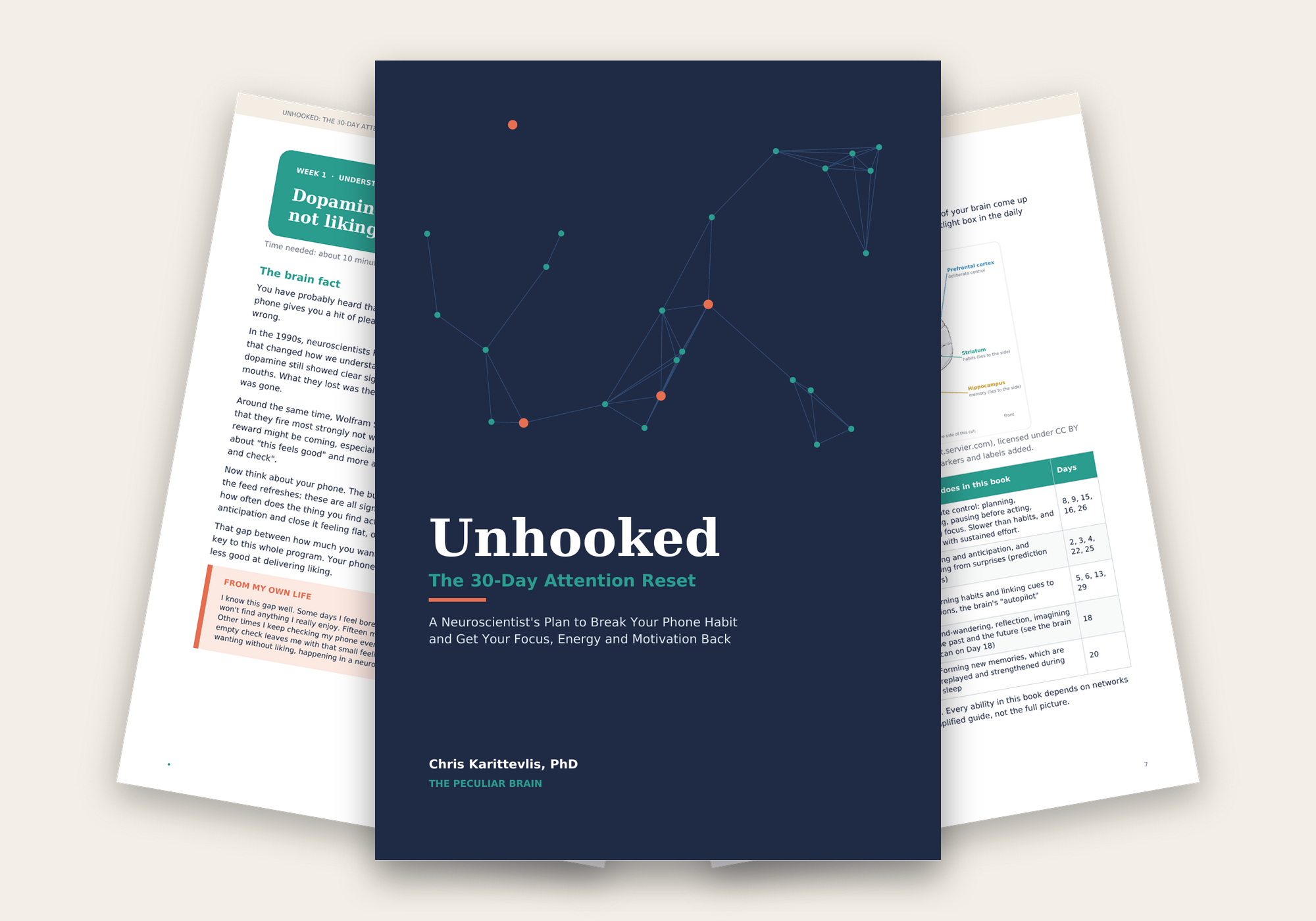
Break your phone habit and get your focus, energy and motivation back. One small, science-based experiment a day. No guilt, no extreme detox, no throwing your phone in the sea.
Written by Chris Karittevlis, PhD · Neuroscientist and Marie Curie fellow · About the author
Printable and fillable PDF · Instant download · Print it and write by hand, or type into it on your computer, tablet or phone
Sound familiar?
- You pick up your phone before you've even decided to.
- You open an app, close it, and open it again a minute later.
- An evening disappears into scrolling, and you feel worse, not rested.
- You feel drained on days you "didn't do much".
- Staying on one task for 20 minutes feels harder than it used to.
This isn't a willpower problem. It's how your brain learns habits. And what the brain learns, it can relearn.
Not another dopamine detox
"Do a dopamine detox." "Your phone is as addictive as cocaine." "Your attention span is shorter than a goldfish's."
Catchy, scary, and mostly wrong. Advice built on myths tends to produce guilt instead of change.
Unhooked takes a different approach. Each day explains what is really happening in your brain, backed by real research, and gives you one small experiment to try. Understanding first, then small changes that add up.
Why a neuroscientist wrote this
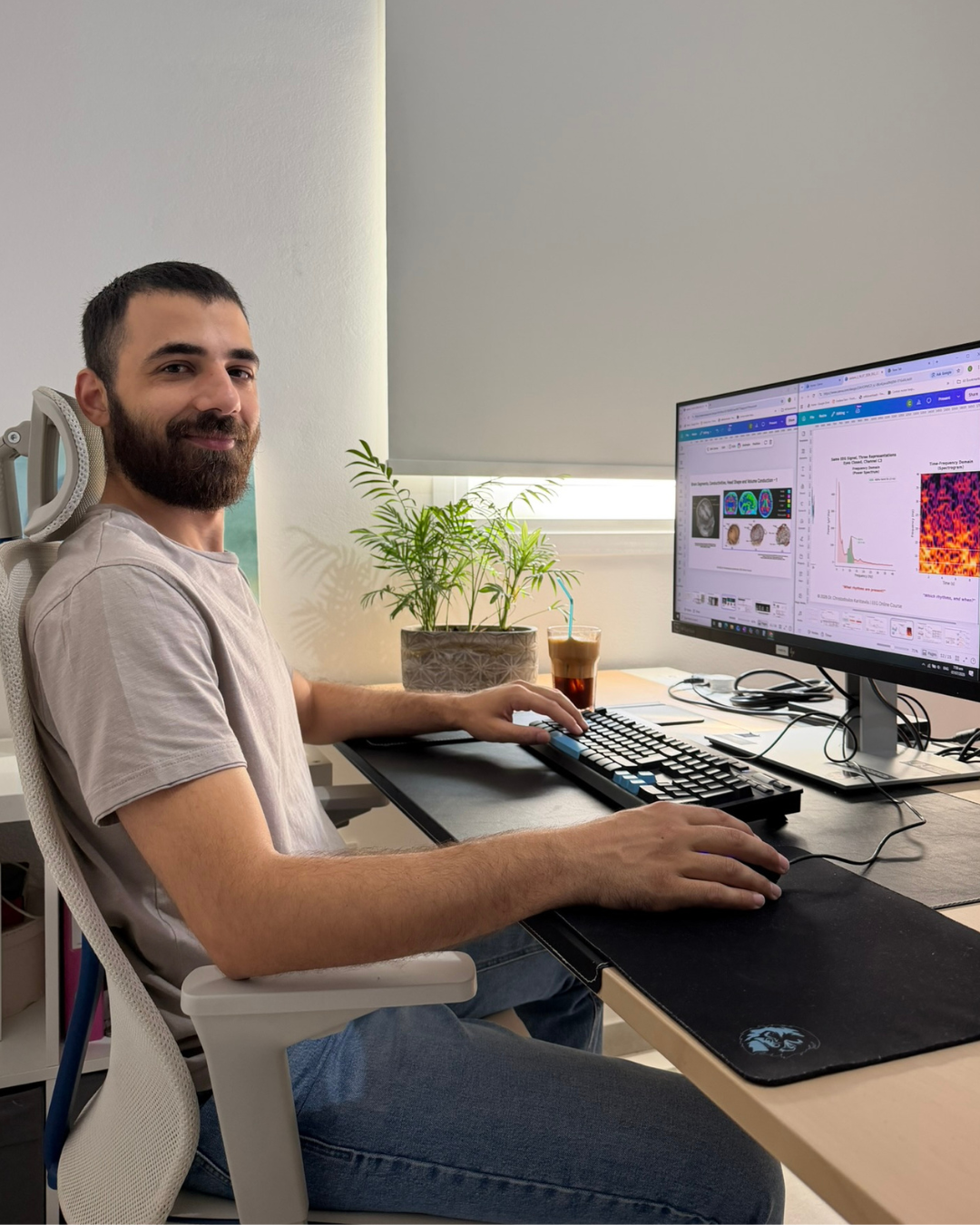
I'm Chris Karittevlis, a neuroscientist based in Cyprus. I hold a PhD in connectivity science with applications in neuroscience, completed as a Marie Curie fellow, and I spend my working life recording and analysing the brain's electrical activity with EEG and MEG.
Through The Peculiar Brain, I share clear, myth-free explanations of how the brain works. I wrote Unhooked because I kept seeing the same thing in people around me, and in myself.
"I still catch myself doing it. Knowing the neuroscience doesn't make me immune. But it does help me understand what's happening, and change it."
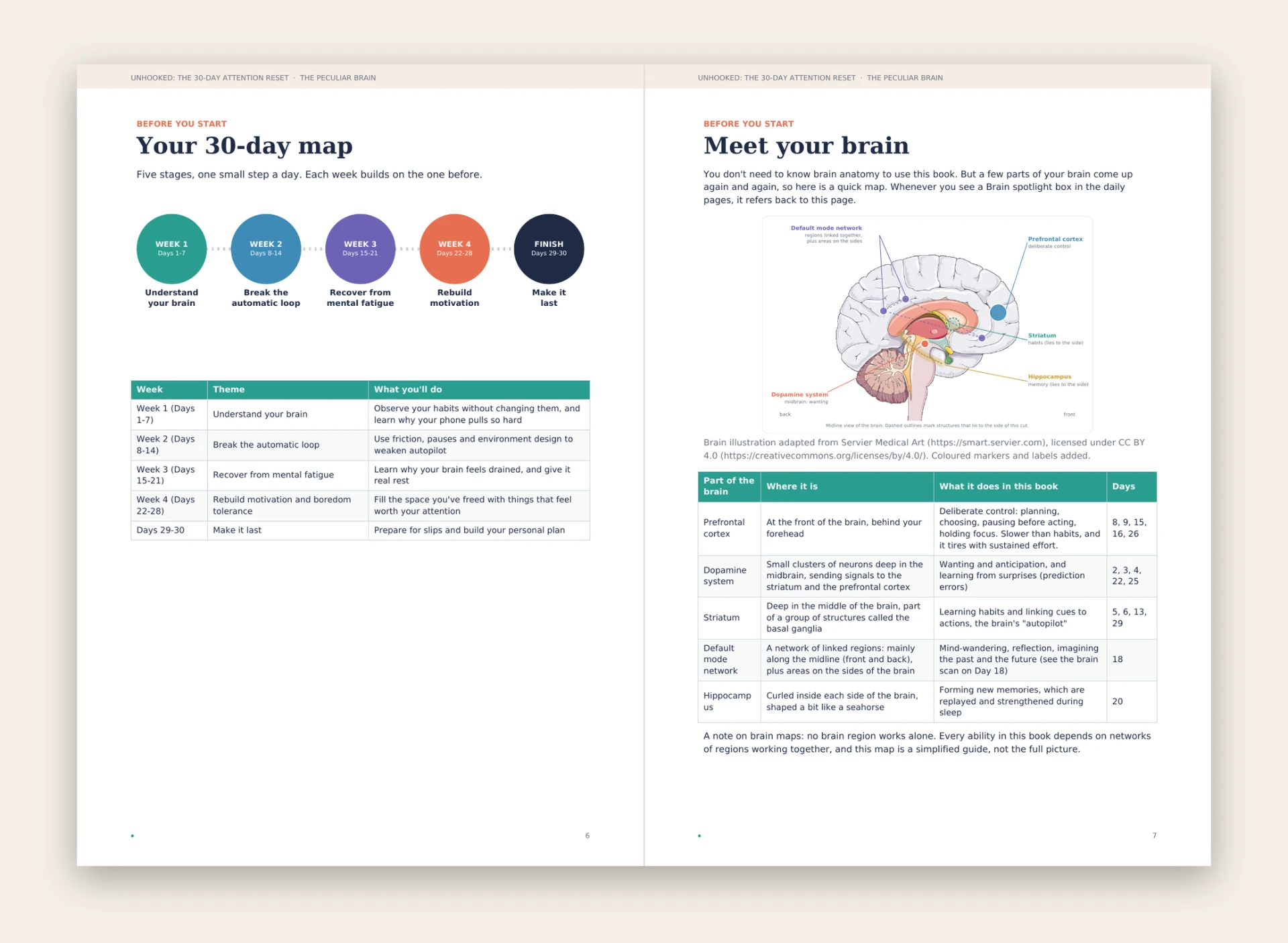
How the 30 days work
Week 1
Understand your brain
Observe your habits without changing them, and learn why your phone pulls so hard.
Week 2
Break the automatic loop
Use friction, pauses and your environment to weaken autopilot.
Week 3
Recover from mental fatigue
Learn why your brain feels drained, and give it real rest.
Week 4
Rebuild motivation
Grow your tolerance for boredom and fill the freed time with things worth your attention.
Days 29 to 30
Make it last
Prepare for slips and build your personal plan.
What every day looks like
About 10 to 15 minutes a day:
- 1
The brain fact: one idea from neuroscience, explained simply.
- 2
Myth vs reality: a popular claim, and what the evidence actually says.
- 3
Today's experiment: one small, concrete thing to try, with a 2-minute quick version for busy days.
- 4
Reflection: a few questions to notice what changed.
- 5
Daily check-in: rate your focus, energy, mood and urge to check your phone.
Take a look inside
Tap any page to see it larger.
What's inside
- 30 daily lessons, each with an experiment you can do the same day
- A quick version of every experiment for busy days
- "Meet your brain": a simple illustrated map of the five brain areas in the book
- Myth vs reality on every day
- Weekly reviews and a 30-day tracker to see your progress
- Personal stories from the author's own phone habits
- Illustrations and real brain images
- Key scientific references for every day
- Your own personal plan for after Day 30
Questions
Is this a digital detox?+
No. You keep your phone. You learn how your brain builds the habit and make small changes that fit your life.
How much time does it take?+
About 10 to 15 minutes a day, plus a small experiment during the day. On busy days the quick version takes a couple of minutes.
What format is it?+
A PDF you can print or fill in on screen. Many people find writing by hand works best for the reflections, so you also get the worksheet pages as a separate ink-saving file to print. You can also type straight into the PDF on a computer or tablet, or on your phone with the free Adobe Acrobat Reader app.
What if I miss a day?+
Just continue where you left off. The book is designed for real life.
Is it only about the phone?+
The phone is where most of us feel it most, but the same ideas work for binge-watching, constant email checking or putting off things that matter.
Is this therapy or medical advice?+
No. It's an educational, practical workbook about everyday habits. If something feels heavier than everyday habits, talking to a doctor or mental health professional is always a good step, and the workbook can sit alongside that.
Can I get a refund?+
Because the workbook is a digital file you get instantly, all sales are final. That's why the first 3 days are free: try them before you buy. If anything is wrong with your file, email me and I'll fix it right away.
Be the first to get Unhooked
Join the waitlist and get the early access price on launch day.